

New Book 'The Starved Brain' by Dr. Gurpreet Padda Reframes Dementia as a Metabolic Disease of Overnutrition
Modern medicine treats the brain like a detached electrical box, ignoring the metabolic furnace keeping the lights on. We are facing a cognitive collapse driven not by a shortage of calories, but by the malnutrition of excess. Over eighty percent of the p
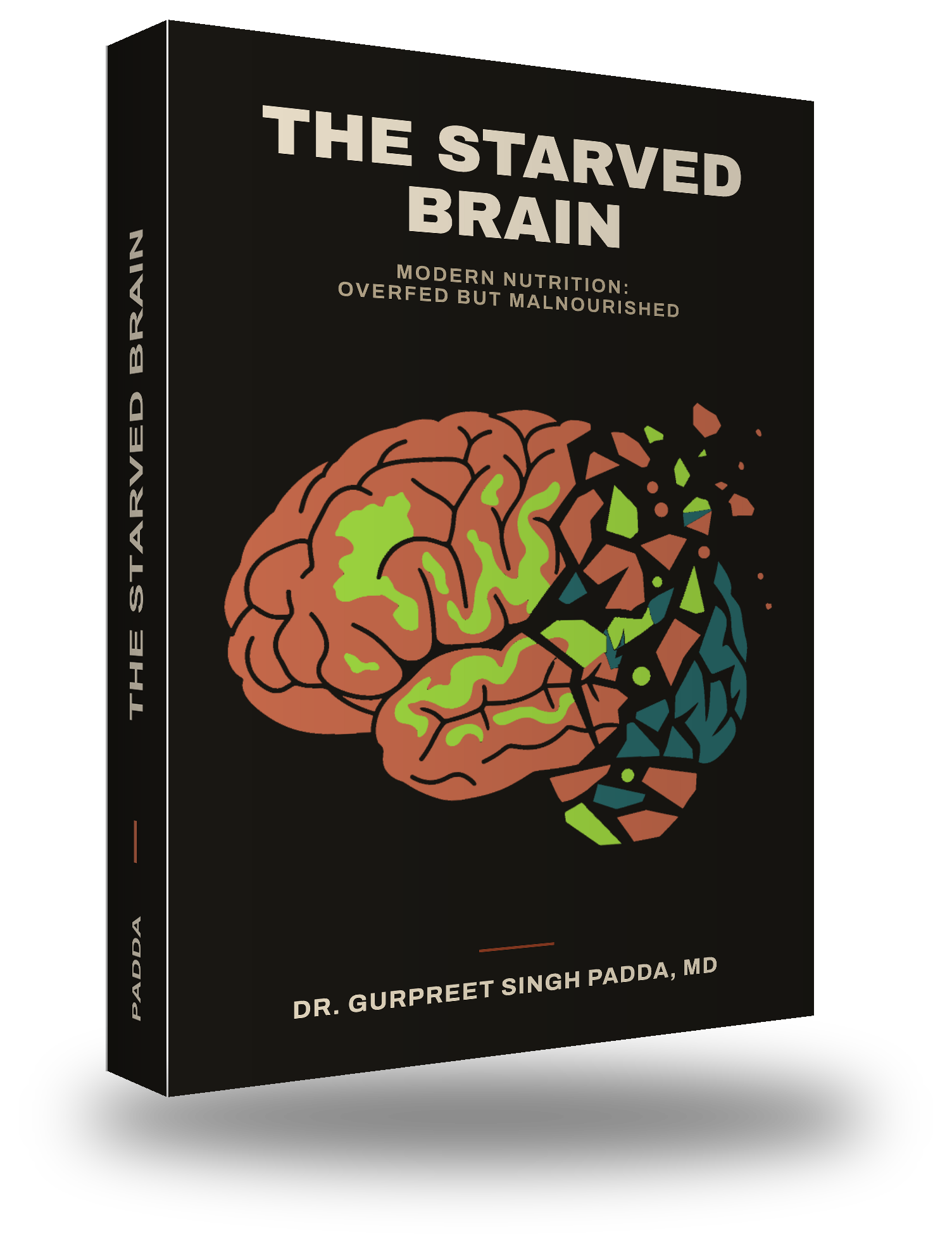
Dr. Padda's new book argues that cognitive decline is driven by the "malnutrition of excess" — a brain overfed on calories yet starved of what it is built from.
The book advances a contrarian but increasingly research-supported thesis: for most people, dementia and age-related cognitive decline are not a fixed genetic verdict, but the predictable — and often modifiable — result of a brain "starved of what it needs and poisoned by what it gets instead."
"We have been trained to treat the brain like a detached electrical box, when it behaves far more like a metabolic furnace," says Dr. Padda. "Genes load the gun. But lifestyle, nutrient deficiency, chronic hyperinsulinemia, and metabolic inflammation are what pull the trigger."
The book opens with two patients. The first is a famine victim whose malnourishment is unmistakable. The second is a fifty-eight-year-old man in a suburban Missouri waiting room who has never gone hungry, yet whose vitamin B12 sits in the bottom quarter of the "normal" range, whose omega-3 index is low, whose homocysteine is elevated, and whose cognitive screening has declined over three years. He has enough food but not enough nourishment. Padda argues that this "double burden of malnutrition" — a phenomenon the World Health Organization has described for years — is now closer to the clinical default than the exception, citing estimates that more than eighty percent of the population shows signs of metabolic dysfunction.
The book organizes cognitive decline into four measurable failures and one shared correction:
Fuel — In Alzheimer's disease, the brain's ability to burn glucose falls years before symptoms appear, while its ability to burn ketones is largely preserved, a pattern researchers have described as "type 3 diabetes."
Structure — The brain holds more than a quarter of the body's cholesterol and manufactures its own; cholesterol and dietary fat are structural materials for myelin and synapses.
Nutrients — A vitamin B12 level inside the "normal" laboratory range can still track with faster brain shrinkage, because reference ranges describe an average population rather than an optimum.
Inflammation — Fructose, industrial seed oils, glycation, and chronic gum disease drive the low-grade "metaflammation" increasingly implicated in neurodegeneration.
One mechanism gives the book its title. Research into how the brain handles excess fructose found that it triggers an ancient biological program evolved to help animals survive starvation, lowering cellular energy and driving foraging behavior (Johnson et al., 2020). As the book states, "Excess doesn't merely coexist with starvation. Excess can switch on the starvation program itself."
The work is notable for its restraint. Every substantive claim carries an inline citation, and the text grades its own evidence — flagging where findings are strong and where they are preliminary, mixed, or drawn from a single small study, including instances where the data contradict popular claims made by proponents of similar arguments. Ketogenic therapy, for example, is presented as a century-old standard of care for drug-resistant epilepsy, while a meta-analysis of ten randomized trials in 691 Alzheimer's patients is characterized as showing real but modest cognitive benefit. As Padda writes, "A book that only tells you the good news is not a book you can trust with your brain."
The Starved Brain is described as a reference book rather than a diet plan, and it repeatedly emphasizes that significant dietary change is a medical event requiring physician supervision, particularly for anyone taking medication for diabetes or blood pressure.
The Starved Brain (ISBN 979-8-90600-156-6) is the companion volume to a five-part video masterclass of the same name. Additional information is available at thestarvedbrain.com and regen.md.
Gurpreet Singh Padda, MD
Regen.MD
+1 314-668-1525
info@regen.md
Visit us on social media:
YouTube
The Fuel Your Brain Is Begging For | The Starved Brain, Part 1
Legal Disclaimer:
EIN Presswire provides this news content "as is" without warranty of any kind. We do not accept any responsibility or liability for the accuracy, content, images, videos, licenses, completeness, legality, or reliability of the information contained in this article. If you have any complaints or copyright issues related to this article, kindly contact the author above.
